Payroll Run
Processing cycle that turns payroll inputs into employee pay, payroll records, and employer remittance obligations.
Payroll Run
A payroll run is the full payroll-processing event in which payroll calculates pay for a group of employees for a regular or special cycle.
From a payroll perspective, the term matters because it describes the whole processing event, not just the day employees are paid. A payroll run includes input review, pay calculation, deduction logic, run-level checks, and payment preparation.
Why Payroll Run Matters
Payroll run matters because it affects:
- when earnings and deductions become final for the period
- how payroll work is organized
- when payroll staff review totals before releasing money
- when employer follow-up items such as remittances will be created
It is also the right term when explaining payroll operations to readers who only see the paycheque and not the process behind it.
How It Works In Canada
In a Canadian payroll environment, a payroll run may involve:
- collecting approved hours or salary changes
- calculating gross pay
- applying source deductions and other deductions
- reviewing the payroll register
- preparing direct deposits and payroll records
The run creates the employee payments and also creates employer-side obligations that will matter later, such as payroll remittance and year-to-date reporting accuracy.
| Run stage | What payroll does | Main output |
|---|---|---|
| Input review | Confirms approved hours, salary changes, bonuses, or special payments | Payroll-ready employee data |
| Calculation | Builds gross pay and applies source deductions and other deductions | Employee pay results for the run |
| Register review | Checks totals, exceptions, and funding needs before release | Approved payroll run |
| Payment release | Produces pay stubs and sends payment on the pay date | Employee paycheque or direct deposit |
| Follow-up | Uses run totals for remittance, reconciliation, and year-end records | Employer obligations and updated year-to-date totals |
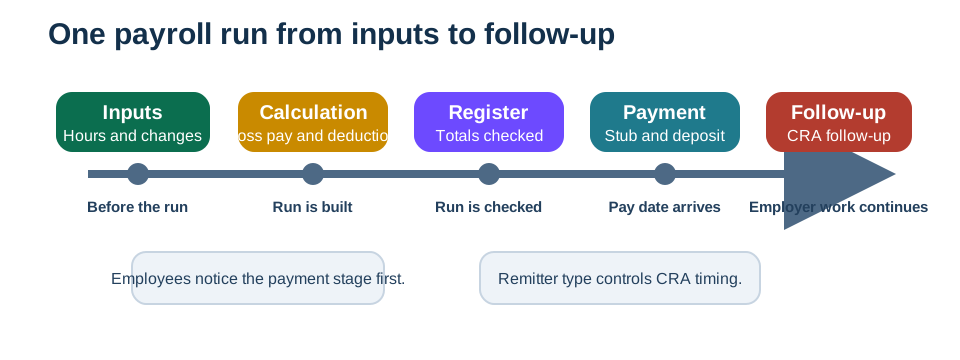
This simplified workflow shows where the payroll run sits between the pay period and the employer’s later remittance work:
Example
An employer closes a biweekly pay period on Friday, calculates payroll on Monday, reviews the register on Tuesday, and releases direct deposits on Thursday’s pay date. The run produces employee payments right away, but it also leaves the employer with source-deduction and employer-contribution amounts that still have to be remitted later.
Common Misunderstandings
- Payroll run is not the same as pay date. The run is the process; the pay date is when payment is released.
- Payroll run is not the same as payroll register. The register is a report used during the run.
- Payroll run is not always only the regular scheduled cycle. Employers may also run off-cycle payroll for bonuses, retro pay, or final pay.
- Payroll run does not end the employer’s work. Remittances and later reporting still follow.
Related Terms
- Pay Period
- Pay Date
- Pay Stub
- Payroll Register
- Direct Deposit
- Source Deductions
- Payroll Remittance
- Year-to-Date
Knowledge Check
- Is a payroll run just another name for payday? No. It is the full payroll-processing event.
- Can a payroll run create employer remittance obligations as well as employee pay? Yes.
- Why does payroll review a register during the run? To check whether the run looks right before payment is released.
Caveat
The sequence and software steps vary by employer, but the core idea does not: the payroll run is the processing event that turns payroll inputs into pay, records, and employer follow-up obligations.