Pay Stub
Employee-facing payroll statement showing earnings, deductions, net pay, and year-to-date totals for a run.
Pay Stub
A pay stub is the payroll record that shows how an employee’s pay for a period was calculated.
In Canadian payroll, it usually shows earnings, deductions, and the final net-pay amount. Employers may also call it a pay statement, earnings statement, or pay advice, but the job is the same: explain how payroll got from earnings to the payment amount.
Why Pay Stub Matters
A pay stub matters because it gives both the employee and payroll staff a transparent view of the payroll result. It helps answer questions such as:
- how much was earned this period
- what source deductions were taken off
- what other deductions were applied
- what amount was actually paid
Without a clear pay stub, gross pay and net pay are easy to confuse, and errors in hours, earnings, or deductions are harder to spot.
How It Works In Canada
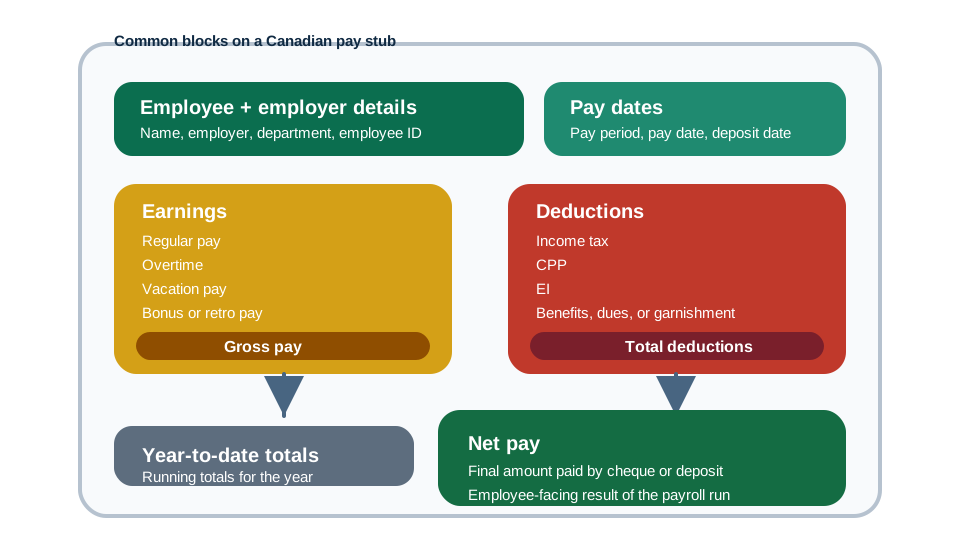
The exact layout varies by employer and payroll system, but a Canadian pay stub commonly includes:
- employee and employer information
- pay period dates and pay date
- earnings lines
- gross pay
- source deductions such as income tax, CPP, and EI when applicable
- other deductions
- year-to-date figures
- net pay
Payroll usually produces the pay stub after the payroll run is calculated. Employees use it to understand the paycheque, while payroll staff may compare it with the payroll register during review.
| Pay stub block | What it usually shows | Why readers check it |
|---|---|---|
| Pay period and pay date | Which work span is being paid and when payment is issued | Confirms the timing of the run |
| Earnings section | Regular pay, overtime, vacation pay, bonuses, or other earnings | Shows how gross pay was built |
| Source deductions | Income tax, CPP, and EI when applicable | Explains the main statutory reductions |
| Other deductions | Benefits, dues, garnishments, or repayment items | Explains employer-specific reductions |
| Year-to-date totals | Running totals for earnings and deductions | Helps employees reconcile the year so far |
| Net pay | Final amount paid to the employee | Shows the take-home result of the run |
This simplified anatomy shows where those blocks usually sit, even when a payroll system uses different labels:
Example
An employee opens a pay stub and sees:
- regular earnings:
$2,000 - vacation pay:
$120 - gross pay:
$2,120 - source deductions:
$410 - benefit deductions:
$85 - net pay:
$1,625
The pay stub shows not only what was paid, but how payroll got there.
Common Misunderstandings
- A pay stub is not the payment itself. It explains the payment.
- A pay stub is not a year-end slip. T4 and RL-1 serve different reporting purposes.
- A pay stub is not the payroll register. The register is an internal payroll review report.
Related Terms
- Gross Pay
- Net Pay
- Pay Period
- Year-to-Date
- Paycheque
- Payroll Run
- Payroll Register
- Source Deductions
- Income Tax Deduction
- T4
Knowledge Check
- Does a pay stub usually show both gross pay and net pay? Yes. That is one of its main jobs.
- Is a pay stub the same as a T4? No. A pay stub explains one payroll period, while a T4 summarizes the year.
- If an employee wants to see deduction detail, is the pay stub the first place to look? Usually yes.
Caveat
Stub format and line labels vary by employer and software. A Canadian pay stub may look different from another employer’s statement while still serving the same function.