Pay Period
Span of time a payroll run covers before the pay date and pay-stub totals are finalized.
Pay Period
A pay period is the span of time for which payroll is calculating pay.
It answers the question, “Which days of work or salary belong in this payroll run?” The pay date may happen later, but the pay period defines the window being paid.
Why Pay Period Matters
Payroll depends on timing. The pay period affects:
- which hours and earnings belong in the run
- when recurring deductions are taken
- how salary is divided across the year
- how year-to-date totals build over time
If the pay period is misunderstood, payroll can be wrong even when the hourly rate or salary amount is correct.
How It Works In Canada
Canadian employers may run payroll weekly, biweekly, semi-monthly, monthly, or on another approved schedule. Whatever the schedule, each run still needs a defined pay period with a start date and end date.
The pay period often appears on the pay stub so the employee can see which workdays or salary window were included. It also matters operationally because payroll staff need to know:
- when time entry closes
- when approvals are due
- whether an adjustment belongs in the current run or the next one
| Payroll term | Main question it answers | Example |
|---|---|---|
| Pay period | Which days are being paid? | March 1 to March 14 |
| Payroll run | When is payroll being processed? | March 17 payroll calculation and review |
| Pay date | When is the employee paid? | March 20 |
| Pay frequency | How often does this cycle repeat? | Biweekly |
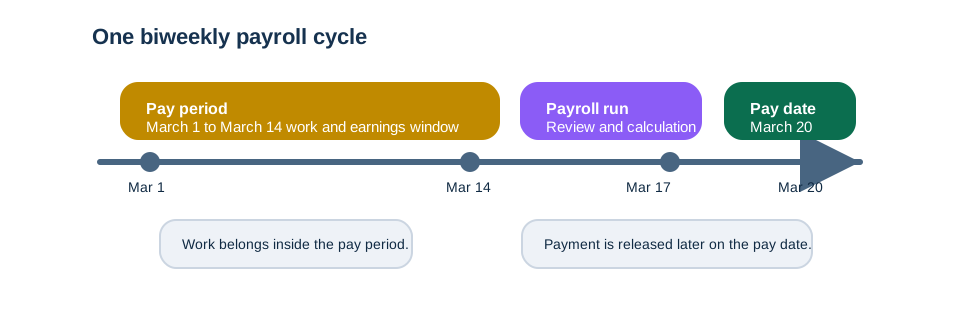
This sample timeline shows how those timing concepts fit together in one ordinary cycle:
Example
An employer runs biweekly payroll.
- pay period: March 1 to March 14
- payroll review and processing: March 17 to March 19
- pay date: March 20
The March 20 payment is for work and earnings that belonged to March 1 through March 14. The pay period and pay date are related, but they are not the same thing.
Common Misunderstandings
- Pay period is not pay date. One is the work window; the other is the payment date.
- Pay period is not always a calendar month. Many employers use cycles that do not match month boundaries.
- Pay period is not the same as a single workweek. Overtime rules and payroll cycles can overlap without being identical.
Related Terms
Knowledge Check
- Does the pay period tell you when the employee receives the money? Not directly. That is the pay date.
- Can an employer pay on a later date than the end of the pay period? Yes. That is normal payroll practice.
- Why does the pay period matter for payroll accuracy? It decides which earnings and hours belong in the run.
Caveat
The basic concept is consistent across Canada, but exact payroll calendars, cutoffs, and approval timing vary by employer and payroll system.